Ration Card
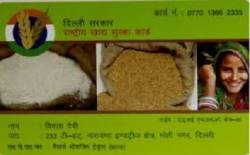
A ration card provides numerous benefits, primarily ensuring food security through access to highly subsidized essential commodities and serving as a key document for availing various other government welfare schemes.
Core Benefits (Food Security)
-
-
- Subsidized Food Grains: The primary benefit is the ability to purchase essential food items like rice, wheat, and coarse grains at minimal prices through Fair Price Shops (FPS) under the Public Distribution System (PDS) and the National Food Security Act (NFSA), 2013.
- Assured Quantity: Depending on the type of card (Priority Household, Antyodaya Anna Yojana, etc.), families are entitled to a specific quantity of food grains per month, such as 5 kg per person for Priority Households or 35 kg per family for AAY cardholders.
- Nationwide Portability (One Nation One Ration Card - ONORC): This scheme allows beneficiaries, especially migrant workers, to access their entitled food grains from any e-PoS enabled fair price shop across the country using their existing ration card and Aadhaar authentication, ensuring food security is not restricted by location.
-
Secondary Benefits (Identity)
A ration card is an official government document that also serves as a versatile form of identification and address proof, necessary for accessing other services and schemes:
-
- Proof of Identity and Address: It is widely accepted as a valid document for applying for other essential documents like PAN cards, passports, voter IDs, and for opening bank accounts.
 +91-011-41106946
 info@trcsc.org.in